
Learn how law firms attract real clients with paid ads that deliver measurable results. This law firm PPC guide walks you through setup, strategy, and growth, step by step.
What is PPC in the legal space?
PPC stands for Pay-Per-Click advertising for law firms. It is a marketing method where your firm’s ad appears at the top of Google when someone searches for legal help, and you pay only when they click.
Imagine a person searching for a “divorce lawyer near me.” The first few results they see usually have a small “Ad” label beside them; those are law firms running campaigns. These firms are not waiting for organic rankings; they are using paid search to connect with clients instantly.
PPC gives your firm immediate visibility, measurable results, and total control over spending. You decide which legal services to promote, how much to pay per click, and which locations to target. It is like turning on a spotlight in front of people who are already looking for your expertise.
For law firms, it can be a game-changer. According to WordStream, law-firm search-ad campaigns in the legal industry average conversion rates of around 5%–7%, because people searching for lawyers are ready to hire.
In this legal PPC guide, we will break down everything from how campaigns work to how you can track every call and form submission with precision.
How Law PPC Works (Step-by-Step)
Let us understand how law firm online advertising actually works behind the scenes. It is simple once you break it down.
Here is how the process unfolds, step by step:
-
You Choose the Keywords
Start by selecting the search phrases your potential clients use. For example, “family lawyer near me” or “criminal defense attorney.” Each keyword you target tells Google when to show your ad.
-
You Set a Budget and Bid
You decide how much you are willing to pay per click. Google runs a quick auction every time someone searches. If your bid and ad quality are strong, your ad appears
-
Your Ad Appears on Google Search
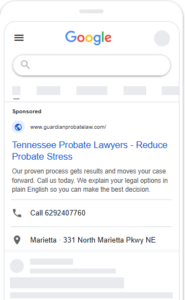
When your chosen keyword is searched, your ad shows above organic listings. This top placement gets attention first, and that is where most clicks happen.
-
The User Clicks and Visits Your Page
The visitor clicks your ad and lands on your chosen page. This could be a page about your services or a consultation form.
-
You Convert the Visitor into a Lead
If your landing page is strong and relevant, the visitor calls or fills out a form. That is how you turn ad clicks into actual client inquiries.
-
You Track, Measure, and Improve
The best part about PPC is control. You can track which keywords bring calls, which ads convert best, and how much each lead costs. You keep improving your campaigns based on real data.
This simple setup forms the core of your law PPC roadmap and helps you understand everything before you scale.
Key PPC Terms for Law Firms
Before you go deeper into campaigns, it is important to understand a few basic terms. These are words you will see often in your Google Ads account and reports. Once you know them, the process becomes far easier to follow.
Here is a quick law firm PPC manual of common terms explained in simple language:
1. CPC (Cost Per Click)
This is the amount you pay every time someone clicks your ad. In law marketing, CPCs can range between $75 and $250, depending on your location and practice area.
2. CTR (Click-Through Rate)
CTR shows how often people click on your ad after seeing it. A higher CTR means your ad message is relevant and engaging.
3. Conversion
A conversion happens when someone performs a valuable action after clicking your ad like calling your office, filling out a form, or booking a consultation.
4. CPL (Cost Per Lead)
CPL tells you how much it costs to get one potential client. You can calculate it by dividing your total ad spend by the number of leads received.
5. Keywords
These are the search phrases you target. For example, “divorce attorney near me” or “criminal defense lawyer.” Choosing the right keywords is the backbone of every law firm PPC strategy.
6. Negative Keywords
These are words you exclude from your campaigns to avoid irrelevant clicks. For example, “free lawyer,” “law school,” or “legal internship.”
7. Ad Rank
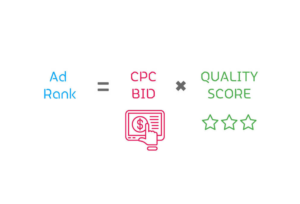
This is Google’s way of deciding where your ad appears on the search page. It depends on your bid amount and ad quality.
8. Landing Page
This is the web page your ad sends people to. It must clearly explain your service and make it easy for visitors to contact you.
9. Quality Score
A rating (1–10) that Google assigns to your keywords and ads. A higher score means lower costs and better ad placements.
Understanding these terms is like learning the language of performance marketing. Managing campaigns becomes far less intimidating once you are comfortable with them.
Benefits of Law PPC
Running ads can feel like a big step, but once you understand how law firm PPC advertising works, the benefits become clear. It is one of the fastest and most measurable ways for lawyers to reach real clients who are actively looking for help.
This law firm PPC playbook highlights why paid ads have become such a powerful marketing channel for legal professionals.
Let us look at the key benefits of paid search for law firms.
1. Instant Visibility
PPC gives your law firm near-instant visibility once your ads are approved. Unlike SEO, which can take months to rank, your ad can appear on page one within hours, competing at the very top of search results for targeted keywords like “lawyer near me.”
2. High-Intent Leads
People clicking legal ads are not browsing for fun; they are searching because they have a real issue to solve. Whether it is a family case, injury claim, or business dispute, it connects you with people ready to hire.
3. Full Control Over Budget
You decide how much to spend daily, which services to promote, and which locations to target. If you want to pause ads or increase the budget, you can do it instantly.
4. Measurable Results
Every click, call, and form submission is tracked. You can see exactly which keywords bring clients and which ones waste money. This makes it one of the most transparent marketing methods for law firms.
5. Flexibility and Speed
You can test different messages, adjust bids, or create new ads anytime. It allows you to react fast to changes in demand, like promoting accident claims after a storm or offering free consultations during slower months.
6. Better ROI Than Traditional Ads
Compared to billboards or print ads, PPC delivers measurable returns. You can calculate your exact cost per lead and know how much each client is worth to your firm.
Why Every Law Firm Needs PPC Today
Competition in the legal market has changed completely. Clients no longer flip through directories or rely only on referrals. Most begin their search for legal help online, and they make decisions fast. If your firm is not visible in those first few search results, your competitors will take the call before you.
That is why this law firm PPC framework has become essential for every modern practice. It helps your firm appear when potential clients are ready to act. When someone searches “personal injury lawyer near me,” paid search makes sure your ad shows up before others. That single click could be a new client for your practice.
PPC also bridges the gap between new and established firms. Even if you are just starting, you can compete with large law firms in your city by targeting specific practice areas, like “divorce lawyer consultation” or “DUI defense near me.”
Modern PPC tools make it easier to track performance, adjust bids, and refine targeting daily. This data-driven flexibility is what gives PPC an edge over any other form of advertising.
Step-by-Step Law PPC Framework
This law firm PPC blueprint explains every part of campaign building in a clear and simple way. Each step matters, and when done right, your ads will bring consistent, high-quality leads to your firm.
1. Campaign Setup Basics
Every strong PPC campaign starts with one clear goal. Decide whether you want phone calls, consultation requests, or form submissions. Create a search campaign inside Google Ads, as it works best for law firms targeting active intent.
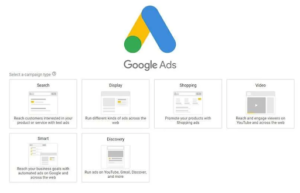
Name your campaign clearly, for example, “Injury Law Leads” or “Divorce Lawyer Consultations.” Keep your location settings limited to your service areas, and always use the Search Network only for maximum accuracy.
Start with a small daily budget of around $50 and adjust later. If your average cost per click (CPC) is $10, that brings roughly five targeted visitors daily who are searching for real legal help.
Takeaway: Define your goal, set smart boundaries, and begin with controlled testing.
2. Targeting and Audience Strategy
Targeting ensures your ads reach people who truly need legal help. Start with high-intent keywords like “personal injury lawyer near me” or “family attorney consultation.” Avoid broad terms such as “law firm services” that can attract irrelevant clicks.
Add negative keywords like “free legal advice” or “law school internship” to block traffic that wastes budget. If your firm serves only certain areas, set location targeting carefully. For instance, a lawyer serving only Miami should exclude nearby cities like Fort Lauderdale to keep traffic focused and cost-efficient.
Creating separate campaigns for each city or practice area improves control and clarity.
Takeaway: Smart targeting makes sure your budget reaches serious prospects, not casual browsers.
3. Ad Copy and Creative
Your ad copy decides whether someone clicks or scrolls past. Write headlines that connect instantly, like “Injured? Get Legal Help Today” instead of vague lines like “Expert Lawyers Available.” Always keep your message clear and action-driven.
Include CTAs such as “Call Now” or “Book Consultation.” Highlight facts that inspire trust; “20 Years in Personal Injury Law” feels stronger than “Trusted Law Firm.” If your ad says “Free Consultation,” make sure your landing page shows that same offer clearly, without forcing visitors to search for details.
Simple, honest copy with real benefits works best because people want quick clarity, not marketing fluff. Following these law firm performance marketing best practices helps you attract leads who are ready to act.
Takeaway: Good ad copy builds trust before a click and creates intent to contact you.
4. Landing Pages and CRO (Conversion Optimization)

Your landing page decides if a visitor becomes a lead. Each practice area should have its own focused page: one for family law, one for criminal defense, and so on.
Keep the layout clean. Use a strong headline like “Talk to an Injury Lawyer Today,” followed by a short contact form and visible phone number. Add testimonials or short case results for proof. If your ad promises “Free Case Review,” the landing page should repeat that exact phrase clearly to avoid confusion or extra clicks.
Avoid long text blocks. Most visitors skim, especially on mobile. Direct design and matching messages increase conversions fast.
Takeaway: Your landing page must deliver exactly what your ad promises, nothing less.
5. Tracking and Attribution
Tracking turns random clicks into real insights. Install Google Tag Manager to monitor calls, forms, and chats. Connect it with Google Analytics 4 for detailed behavior tracking. This setup helps you see which keywords drive leads and which ones waste spending.
For example, a personal injury lawyer might find “truck accident attorney” converts better than “car accident lawyer.” Adjusting spend toward such keywords reduces Cost Per Lead (CPL) significantly. Always track calls separately because many legal clients prefer phone contact over forms.
Review your performance weekly and update bids based on data, not guesses.
Takeaway: You cannot improve what you do not measure; tracking makes every dollar count.
6. Budgeting and Scaling
Budgets decide how fast your data grows. Begin small, around $1,000–$2,000 monthly, and let the campaign collect 100+ clicks before judging performance. If your CPC is $10, that is enough to understand what works.
Once you identify strong keywords and ad combinations, increase your budget gradually by about 10–15% each week. If your ad for “divorce lawyer near me” converts at $300 per lead, scale spending on that keyword and pause the rest. Avoid doubling budgets suddenly, as it can confuse Google’s learning phase.
Following this law firm PPC blueprint helps you grow steadily, keeping lead costs predictable and campaign performance stable.
Takeaway: Scale only when the data proves success; steady growth brings stable ROI.
7. Legal Compliance
Law firm ads must follow both Google’s advertising policies and bar association guidelines. Avoid using absolute claims like “Guaranteed Win” or “Best Lawyer in Town.” Instead, use factual language such as “Experienced Criminal Defense Attorney, 1,000+ Cases Handled.”
Always display your firm’s name, license details, and disclaimers when required. If your ad says “No Win, No Fee,” make sure your terms explain it clearly on the landing page. Transparency not only keeps you compliant but also builds client trust instantly.
Compliance mistakes can lead to disapproval or account suspension, so it is worth reviewing your ads regularly.
Takeaway: Honesty and clarity in advertising protect your reputation and boost credibility.
Pricing and Budget Expectations
Many lawyers hesitate to start PPC because they are not sure how much it costs. The truth is, bids are flexible. You can start small, test your campaigns, and scale based on results. Still, it helps to know what typical costs look like before you begin.
On average, law firms spend between $2,000 and $15,000 per month on PPC, depending on their location and practice area. High-intent keywords like “personal injury lawyer” or “criminal defense attorney” usually cost more because the competition is intense.
Here’s a quick law firm paid marketing checklist to understand how budgets usually align with results:
| Practice Area | Avg. Monthly Ad Spend | Avg. CPC | Avg. Cost Per Lead |
| Personal Injury | $8,000–$20,000 | $100–$250 | $400–$900 |
| Family Law | $2,000–$6,000 | $40–$100 | $200–$500 |
| Criminal Defense | $3,000–$10,000 | $60–$150 | $300–$700 |
| Immigration | $1,500–$5,000 | $25–$70 | $150–$400 |
These figures give you a realistic view. For example, a family law firm running a $3,000 monthly campaign with a $60 CPC can expect around 50 clicks. If even five of those clicks convert into consultations, the cost per lead is roughly $600. With better targeting and improved landing pages, the cost often drops by 20–30%.
According to WordStream’s Legal PPC Benchmarks 2025, law firms with structured ad setups see an average conversion rate of 7.4%, nearly double the general industry average.
The best part about PPC is control. You can start at your comfort level, monitor every penny, and increase your budget once you see results. There’s no minimum commitment, and you can pause or adjust campaigns anytime you choose.
Takeaway: Law PPC doesn’t demand huge budgets. Start small, measure results, and scale confidently.
Proof & Results: Real PPC Performance in the Legal Industry
(Graphic placeholder: Georgia Probate Law Group (GPLG) Campaign Performance, Jan to Apr 2025)
Data shows how structured PPC campaigns turn visibility into measurable client actions.
The following example from our legal services PPC guide highlights how a probate law campaign running from January to April 2025 achieved consistent growth through smart optimization, compliant messaging, and accurate audience targeting.
Google Ads Performance Overview
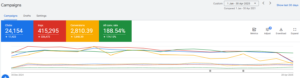
Between January and April 2025, the campaign recorded great improvements across every key metric.
Clicks grew to 24,154, showing a sharp increase of +17,423 compared to the previous period. Impressions rose to 415,295, which means the ads reached thousands more families searching for legal guidance.
Most importantly, total conversions jumped to 2,810, a +188% increase in the overall conversion rate. This means that for every visitor who clicked an ad, a far higher percentage went on to contact the firm through calls, forms, or direct consultations.
Such data reflects the value of maintaining steady optimization. When ads, keywords, and landing pages stay aligned, each dollar spent creates more real inquiries instead of just website visits.
For example, refining ad text from “Probate Law Services” to “Talk to a Probate Lawyer Today” often improves conversion rate because it gives a clear action step.
Meta Ads Performance Overview

From January to April 2025, Meta campaigns (Facebook, Instagram, and Audience Network) showed significant reach and engagement growth. Total impressions rose by 739%, expanding visibility across all placements. Facebook impressions increased by 577%, while Instagram and the Audience Network grew by 320% and 1,998%, respectively.
The number of consultations booked jumped from 9 to 116, marking a 1,188% increase in results. This growth reflects how awareness-focused ads on Meta can turn into real client actions over time. Following a structured law firm PPC strategy guide helped make sure every campaign maintained consistency across visuals, messaging, and targeting.
Even with slight variations in click-through rate across platforms, Facebook achieved a 35% CTR improvement, driven by ad visuals and empathetic copy that resonated with families seeking probate guidance.
To see how these campaigns were executed in practice, check out the full GPLG case study, which outlines the strategies and results achieved.
Performance Insights
This performance pattern demonstrates how legal PPC depends on accuracy. Campaigns with localized targeting and tested ad copy tend to drive higher-quality clicks. When combined with compliance-friendly messaging, results become both sustainable and scalable.
The steady rise in traffic (+65%) and conversion rate (+174%) suggests two key things:
- Searchers found the ad relevant to their needs.
- Landing pages clearly answered their intent.
Takeaway: Strong PPC performance is not luck; it is the result of consistent testing, clear messaging, and compliance with every rule that matters.
Lead Magnets & Resources for Law PPC
Practical resources can help you manage, audit, and improve your campaigns faster.
Think of this section as your law firm’s paid search handbook, a toolkit that makes setup, optimization, and scaling easier.
Below are the most valuable free resources every law firm should use while running PPC campaigns:
1. Negative Keyword List for Lawyers
Negative keywords protect your budget from irrelevant traffic. Add words like “free,” “internship,” or “law school” to avoid paying for unqualified clicks.
You can also include unrelated case types. For instance, if you handle family law, exclude terms like “injury claims” or “criminal lawyer.”
Regularly updating this list keeps your campaign cost-efficient.
Takeaway: A strong negative keyword list saves money and improves lead quality.
2. Law Firm Ad Copy Template
Good ads follow a pattern: a clear promise, benefit, and call to action.
Example: “Need Probate Help in Atlanta? Talk to a Local Lawyer Today.”
This format speaks to intent, not just information.
A pre-built ad copy template helps you craft multiple ad variations quickly. Use it to test different CTAs or service highlights and measure which ones convert better.
Takeaway: Clear, benefit-driven ads increase clicks and client trust.
3. Landing Page Checklist
Your landing page decides whether someone contacts you or leaves.
Follow a law firm PPC checklist to make sure your page includes:
- A visible contact button
- Service summary in plain language
- Testimonials or trust badges
- Fast load speed and mobile optimization
- Even small improvements like adding a “Call Now” button at the top can increase conversions by over 20%.
Tracking results weekly keeps campaigns on course.
Use a spreadsheet that lists key metrics: clicks, CPC, CTR, conversions, and CPL. Compare performance month by month to identify patterns and scale profitable keywords.
For example, if you see that “divorce consultation near me” gives more leads at a lower cost, you can increase its budget for better ROI.
Takeaway: Consistent tracking helps you make smarter, data-driven budget decisions.
5. PPC Compliance Guide for Legal Ads
Legal advertising must follow strict rules on all platforms.
This law firm PPC playbook explains what is allowed, what to avoid, and how to stay compliant.
You will learn how to write transparent ad copy, use disclaimers, and structure content safely for Google and Meta.
Read the “Legal Advertising Compliance Guide” before publishing any new campaign.
Takeaway: Compliance isn’t optional; it protects your firm’s credibility and assures ad stability.
Common Mistakes to Avoid in Law PPC
Even well-planned campaigns can fail if you ignore small details. Legal advertising works best when guided by structure and accuracy.
Here are the most common errors law firms make, along with law firm PPC best practices to help you avoid them.
1. Ignoring Call Tracking
Many law firms track form submissions but forget about call tracking. Most legal leads still come from phone calls, not website forms. Without tracking numbers, you cannot identify which ad or keyword drove those calls.
For example, if several clients call after seeing “Family Lawyer Near Me,” you might never realize that ad is your top performer.
Using call tracking tools such as CallRail or Google Ads Call Extensions solves this gap.
2. Using Broad Match Keywords Only
Broad matches look simple, but waste money fast. If you target “lawyer,” your ad could show “lawyer salary” or “law school admissions.” These clicks cost money but bring no leads.
Start with a phrase or exact match to focus on high-intent searches. Expand later once campaigns mature and you have conversion data.
3. Sending Traffic to the Homepage
Directing all ads to your homepage hurts conversions.
Each practice area deserves its own landing page: personal injury, family, or criminal defense.
If someone searches “DUI lawyer near me,” they expect a page explaining DUI defense, not a general firm overview. Focused pages boost engagement and cut bounce rates.
4. Ignoring Negative Keywords
Neglecting negative keywords can burn through your budget quickly. Without excluding terms like “free advice” or “lawyer jobs,” your ads appear for irrelevant searches.
A weekly review of your search terms report keeps wasted spending under control and should be part of every law firm advertising checklist.
For example, a firm targeting “estate lawyer consultation” should exclude “estate planning course.”
5. Not Scheduling Ads

Leaving your ads live 24/7 often leads to waste. Clients rarely contact lawyers in the middle of the night. Use ad scheduling to show your ads during business hours when your team can answer calls.
For example, scheduling ads from 8 a.m. to 8 p.m. lets you reach people when they are ready to talk.
6. Neglecting Local Targeting
Ignoring location filters is a common mistake in PPC for lawyers. If your firm serves only Chicago, your ads should not appear across Illinois. Use city-level targeting and exclude areas outside your practice zone. Localized campaigns deliver better leads and lower acquisition costs.
7. Focusing on Clicks, Not Leads
Many beginners measure success by clicks alone. The true measure of performance is qualified leads. Review conversion data weekly and increase bids on ads that deliver consultations, not just visits.
For example, “divorce consultation near me” might outperform “family lawyer advice” by a wide margin.
Advanced Tactics for Law PPC
Once your campaigns are stable and generating consistent leads, it is time to take the next step. These law firm PPC best practices go beyond setup. They help you scale results effectively while maintaining lead quality and compliance.
1. AI and Smart Bidding Automation
Google’s AI tools are powerful when used strategically.
Start by switching from manual bidding to Smart Bidding strategies like Maximize Conversions or Target CPA. These automatically adjust bids to focus on leads most likely to convert.
For instance, if your campaign notices that users searching “estate lawyer near me” usually fill out forms within 30 seconds, Google will prioritize those impressions. It learns patterns faster than manual adjustments.
Still, monitor results weekly to make sure automation aligns with your goals.
2. Multi-Channel PPC Approach
Many law firms focus only on Google, but combining channels improves reach and performance.
Running both Google Ads and Meta Ads creates a full-funnel effect. Google captures high-intent searches, while Meta builds awareness through emotional storytelling.
For example, a probate lawyer might run a Google ad for “Probate Attorney Consultation” and a Meta campaign sharing a helpful post about “What Happens After a Loved One Passes Without a Will.”
Together, they educate and convert audiences across different intent levels.
3. GEO and AEO Optimization
Search is developing fast. Beyond SEO and PPC, firms now need Answer Engine Optimization (AEO) and Generative Engine Optimization (GEO) to stay visible in AI-driven results.
This means structuring your content and ads to match conversational queries like “Who’s the best probate lawyer in Atlanta?”
Include clear answers in ad copy and landing pages, use structured data, and feature FAQs. These help Google’s AI tools understand and feature your firm in emerging AI overview panels.
4. Video and Visual Ad Formats
Law services are personal, and video creates trust faster than text. Short explainer videos, for example, “How Probate Works in 3 Steps,” perform well on both Meta and YouTube.
You can repurpose client testimonials, team introductions, or educational tips as video ads.
These build emotional connection and increase engagement rates by over 25%, according to Meta Business Insights 2025.
5. Continuous A/B Testing
Even the best campaign needs testing. Try different headlines, CTAs, or landing page designs every few weeks.
For instance, test “Book Your Free Case Review” against “Talk to a Lawyer Today.” Track which headline brings more calls or form fills. Keep the winner, pause the rest, and repeat the process.
About iClick Advantage
Behind every effective PPC campaign is a balance of research, precision, and human understanding. iClick Advertising applies a structured law firm PPC framework designed to make campaigns effective, ethical, and measurable. The focus lies in combining strategy, compliance, and steady performance improvement rather than quick wins or over-automation.
AI + Human Strategy
iClick blends automation with human insight. Smart bidding tools and algorithms manage data, while experienced strategists refine ad copy, targeting, and compliance. The goal is balance: machines analyze patterns, and people assure relevance and empathy. This mix keeps campaigns efficient, especially for sensitive legal audiences where tone and timing matter as much as keywords.
Industry-Focused Expertise
Every industry behaves differently online, and iClick builds strategies that reflect that. For law firms, the focus is on intent-driven keywords, clarity, and responsible communication. The process starts with understanding client needs, whether someone wants a quick consultation or detailed legal help, and builds campaigns that respond to those moments in real time.
Transparent Reporting

Transparency builds trust. iClick Advertising tracks key PPC metrics like impressions, clicks, conversions, and cost per lead, sharing results through easy-to-read dashboards. This structure turns advertising data into clear insights that law firms can act on confidently. The reporting process aligns with a law firm PPC roadmap, keeping every decision measurable and every outcome visible.
Performance-First Approach
Performance at iClick is about refinement, not rush. Campaigns are reviewed weekly, optimized based on data, and scaled only when stability is proven. Instead of competing through budget size, the focus stays on message accuracy, targeted bids, and audience alignment. This steady process improves ROI while maintaining long-term visibility in competitive legal markets.
FAQs: Understanding Law Firm PPC
1. How does PPC help law firms attract qualified clients?
PPC helps law firms connect directly with people actively searching for legal help. When someone searches “divorce lawyer near me” or “estate attorney consultation,” your ad appears above organic results. This visibility brings high-intent traffic with the people who are ready to call or book an appointment. The law firm PPC guide approach makes sure every click is targeted, measurable, and aligned with your firm’s goals.
2. How long does it take to see results from PPC campaigns?
Most law firms start seeing measurable results within the first 30–60 days, depending on competition and budget. Initial weeks are about collecting data, optimizing keywords, and testing ads. After that, consistent improvements appear as campaigns stabilize. A clear PPC plan helps track progress step by step, so firms can make adjustments based on conversion data rather than assumptions.
3. What is a good PPC budget for a small or mid-size law firm?
There is no fixed number, but many firms begin with $2,000–$5,000 per month. This range allows enough clicks and conversions to measure performance without overspending. The right budget depends on your location, practice area, and average cost per click. A structured law firm PPC framework makes sure every dollar goes toward reaching the right audience, not just generating clicks.
4. Can PPC work for niche legal services like immigration or probate law?
Yes, PPC works exceptionally well for niche practice areas. These services often have lower competition and highly specific search intent. For example, keywords like “probate lawyer Atlanta” or “immigration attorney consultation” can deliver strong ROI if campaigns use precise targeting and localized messaging. This guide includes strategies for smaller practice areas that rely more on clarity and trust than scale.
5. How is PPC different from SEO for law firms?
PPC provides instant visibility, while SEO builds long-term organic rankings. In PPC, you pay per click and see results within days. SEO, on the other hand, may take months but offers ongoing benefits once established. Many firms use both together, PPC for quick leads and SEO for sustainable visibility. A well-balanced plan often delivers the best outcomes for law practices.
6. What metrics should law firms monitor to measure PPC success?
The most important metrics are Cost Per Lead (CPL), Click-Through Rate (CTR), Conversion Rate, and Quality Score. These numbers show how effectively your ads are performing. Tracking calls and form submissions helps you connect ad spend with real client actions. Using a law firm PPC manual makes sure that reporting stays structured and improvements are based on verified data, not just impressions or clicks.
Ready to Build Smarter Campaigns?
You have learned how law firm PPC works from setup to scaling.
Now, take what you have learned and see how your own campaigns measure up.
Get a detailed review of your performance, missed opportunities, and next-step recommendations designed for your firm.